Junjie Luo

PhD Student, Electrical and Computer Engineering

Purdue University

About

On the job market. I am seeking research positions in computational imaging, in both industry and academia, starting Summer 2026. Please feel free to reach out, or view my CV (academia) or resume (industry).
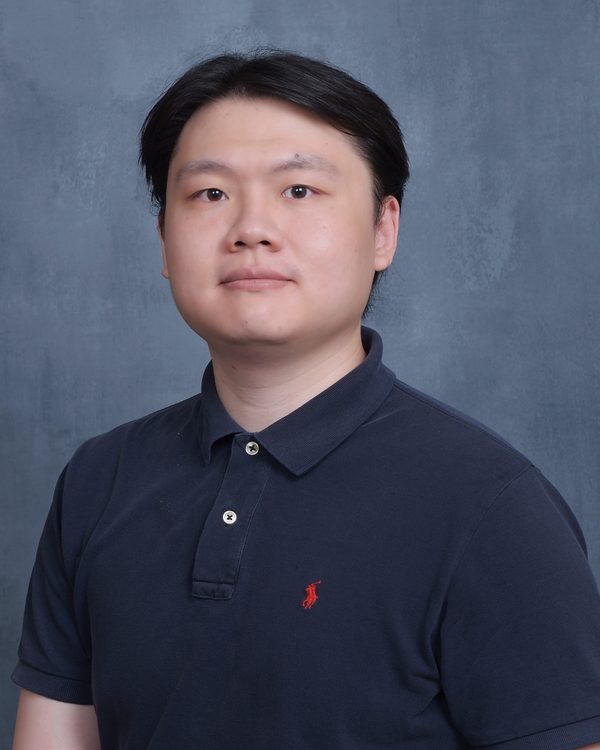
Portrait of Junjie Luo

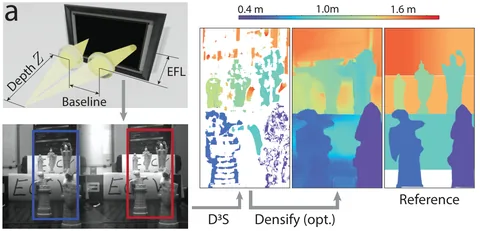
I am a PhD student in the School of Electrical and Computer Engineering at Purdue University, advised by Prof. Qi Guo. I work on passive depth sensing and computational imaging, with a focus on depth-from-defocus (DfD) and triangulation-based methods. My most recent work, Depth from Dual Differential Defocus and Stereo Consensus (D3S), unifies differential defocus with stereo triangulation to recover accurate depth from a 4-mm baseline compact binocular system, pushing the trade-off between form factor and working range.

I also work closely with Prof. Emma Alexander, who serves as a co-corresponding author on my first-author papers and has shaped much of my research thinking.

Broadly, I am interested in designing imaging systems and algorithms that extract reliable 3D information.

Research Interests

  • Computational imaging and hardware–algorithm co-design
  • Passive 3D sensing and depth estimation
  • Joint optical design and end-to-end optimization of imaging systems
  • Photon-limited and single-photon imaging
  • Snapshot and real-time imaging systems
  • Deep learning and generative models for computational imaging
Education

  • PhD, Electrical and Computer Engineering
    Purdue University, West Lafayette, IN, USA
    In Progress, Expected Graduation: Summer 2026
  • MS, Computer Information and Technology
    Purdue University, West Lafayette, IN, USA
  • BS, Software Engineering
    Sun Yat-sen University, Guangzhou, China

Publications

Depth from Dual Differential Defocus and Stereo Consensus

Luo, J., Xu, W., Alexander, E., Guo, Q.

Abstract. We present D3S, a triangulation-based passive ranging mechanism that unifies a new Dual Differential Defocus (D3) image–depth relationship with stereo triangulation. Enforcing consensus between the two cues yields highly accurate depth from a compact binocular prototype (4 mm baseline, 12 mm effective focal length), pushing the trade-off between form factor and working range.

D3S project logo
Under review

Compact Single-Shot Ranging and Near-Far Imaging Using Metasurfaces

Luo, J., Liu, Y., Chen, W. T., Wang, Q., Guo, Q.

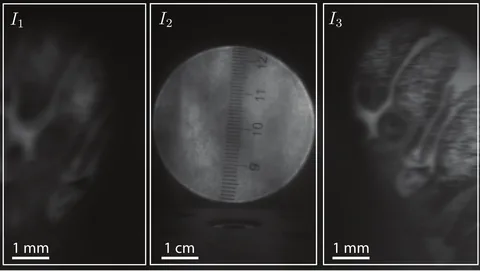
Abstract. We introduce a hybrid metasurface–refractive imaging architecture that multiplexes multiple sub-images onto a shared photosensor, enabling simultaneous near-field passive ranging (12–20 mm working range, ±1 mm accuracy) and far-field macroscopic imaging at ~40 cm, all within a 15 mm system track length—targeted at resource-constrained edge platforms and AUVs.

STTR project logo
SPIE Defense + Security (Navy STTR Project), 2026.

Focal Split: Untethered Snapshot Depth from Differential Defocus

Luo, J., Mamish, J., Fu, A., Concannon, T., Hester, J., Alexander, E., Guo, Q.

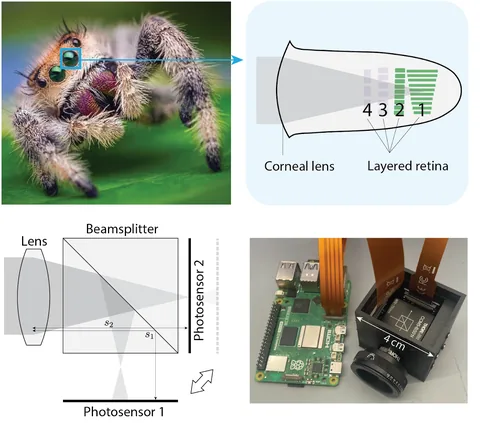
Abstract. We present Focal Split, a snapshot depth-from-differential-defocus method that uses two images captured with different sensor distances via a beamsplitter to recover dense, long-range depth with a compact form factor.

Focal Split project logo
IEEE/CVF Conference on Computer Vision and Pattern Recognition (CVPR), 2025.

Blurry-Edges: Photon-Limited Depth Estimation from Defocused Boundaries

Xu, W., Wagner, C., Luo, J., Guo, Q.

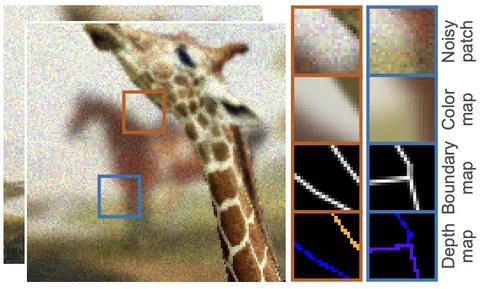
Abstract. We propose a boundary-focused approach for depth estimation under extreme photon limitations, leveraging defocused edges to obtain robust depth measurements when conventional methods fail.

Blurry-Edges project logo
IEEE/CVF Conference on Computer Vision and Pattern Recognition (CVPR), 2025.

Depth from Coupled Optical Differentiation

Luo, J., Liu, Y., Alexander, E., Guo, Q.

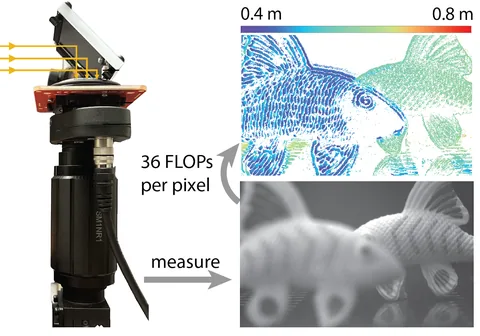
Abstract. We propose depth from coupled optical differentiation, a low-computation passive-lighting 3D sensing mechanism that exploits jointly designed optical transfer functions and computational reconstruction.

Depth from Coupled Optical Differentiation project logo
International Journal of Computer Vision (IJCV), 2025.

CT-Bound: Fast Boundary Estimation From Noisy Images

Xu, W., Luo, J., Guo, Q.

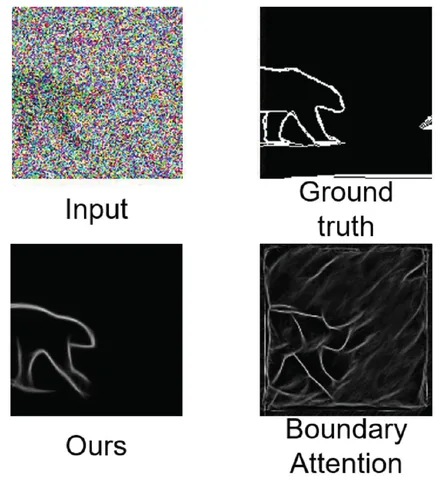
Abstract. We introduce CT-Bound, a robust and computationally efficient boundary detection method designed for very noisy image regimes, with applications to photon-limited imaging.

CT-Bound project logo
IEEE 26th International Workshop on Multimedia Signal Processing (MMSP), 2024.

Generative Quanta Color Imaging

Purohit, V., Luo, J., Chi, Y., Guo, Q., Chan, S. H., Qiu, Q.

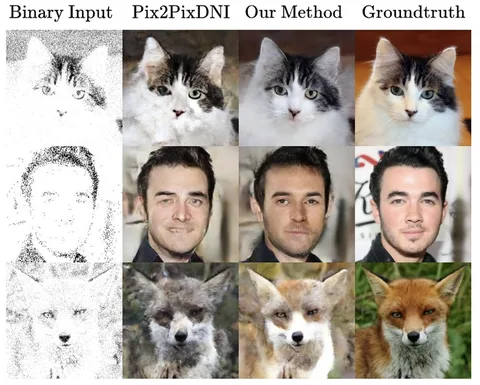
Abstract. We explore generative modeling for color image formation with single-photon cameras, enabling high-quality reconstructions from severely photon-limited measurements.

Generative Quanta Color Imaging project logo
IEEE/CVF Conference on Computer Vision and Pattern Recognition (CVPR), 2024.

Contact

For research inquiries, collaborations, or questions about my work, feel free to contact me:

  • Email: luo330@purdue.edu
  • Office: Flex Lab 3095, 205 Gates Rd, West Lafayette, IN 47906, USA